Featured post

Big Bang - not the Television series.

The thing is that as human beings we cannot contemplate the insignificance of our existence in relation to the vast reaches of what we call ...

Saturday, 26 June 2010

Birling Village Kent

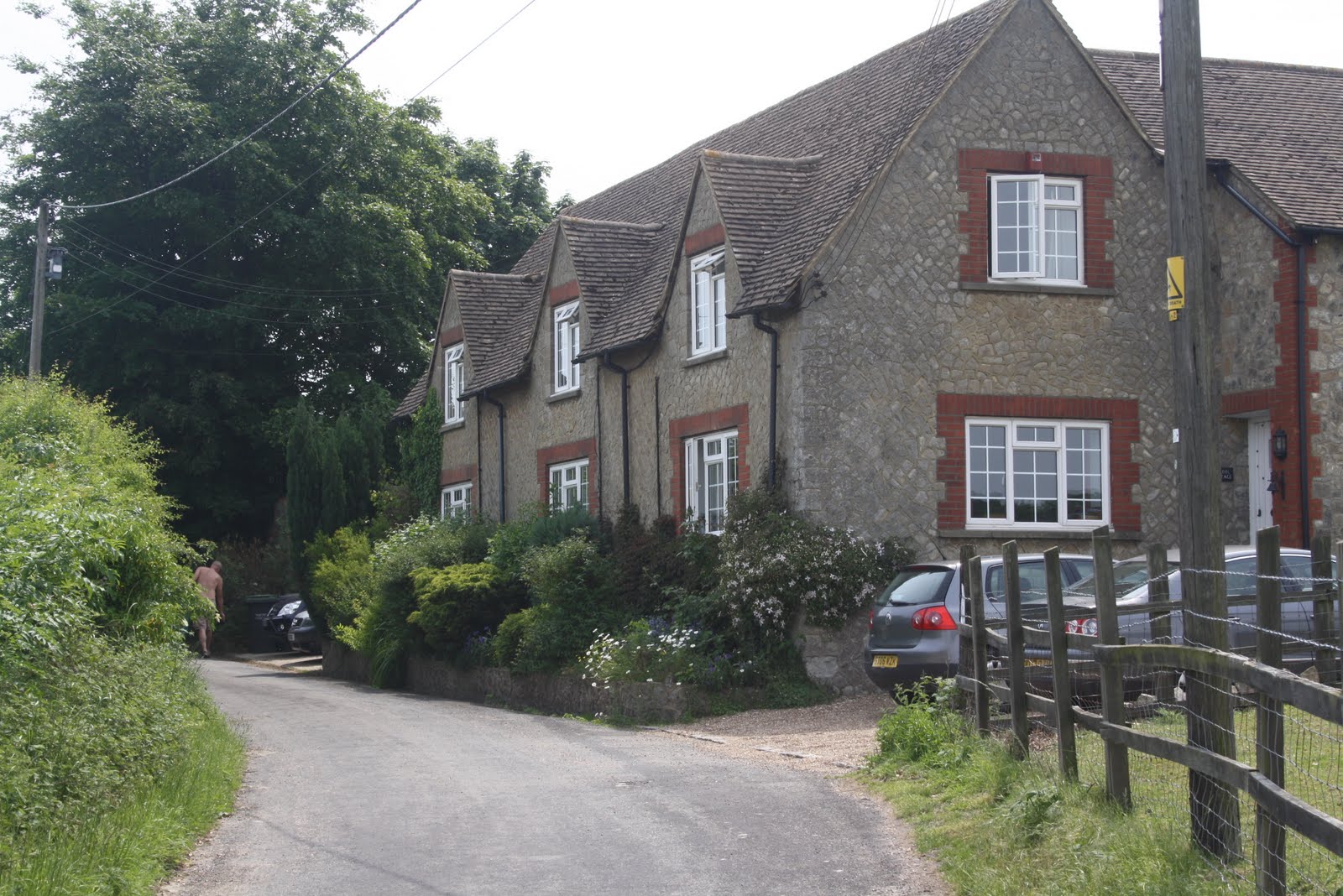
Birling is a small village close to Maidstone and West Malling in Kent set on the road between Ryarsh and Snodland.  Its attraction is the church on the hill and the ragstone houses built by the Neville estate for its workers.  As the friendly church warden informed us, it is a fuedal village and from the way she described the community, the youngest Neville plays the organ at the church, and how the family are tied to the church and the land around we had to believe her. The result is an attractive Kent village with that look of the larger towns, such as Maidstone and parts of Rochester.  The houses built of Kentish Ragstone and brick are attractive and are well looked after.  Notably the modern newly built homes followed the older style and although it obvious that they are new they blend in.   We wandered around in the heat taking a look at the church - there is parking - and took a stroll to the Neville Bull for a light lunch and some liquid refreshment.

The place is worth a visit.  Statement of fact.  The pub was clean, the landlord cheerful and friendly, the food good and the menu extensive.  The Bull theme is carried out with some droll water color cartoons distributed around the walls - dreadful jokes - but worth a look.  There is a large car park and a patio for sun lovers and smokers. 

Birling has its own attractions, least of all the glowing roses that abound in the gardens which at this time of the year with the rain and the hot sun are going crazy trying to show off.  A quietly pretty village Birling is surrounded by farmlands with paths leading to woodlands, to Ryarsh and back up to Holly Hill,  a local woodland area.  For the less intrepid walker the good news is that there is a car parking space at the Holly Hill woods and from there it is pleasant to walk along the West Weald Way or to take the paths to Luddesdown - that depends on the weather and the time you want to spend. 

The casual walk around Birling in the twenty to thirty degree heat was a little too much for me skin and blister and at one stage she sheltered in the shade of a telegraph pole to keep out of the sun.  Singing 'Waltzing Matilda' to remind her how hot it can get in Aussie I suggested we wander back to the church and go inside where it was cool.  It was there met the church warden and chatted.  A church has stood there since medieval times and has been impoved, added to and refurbished.  It is worth a look and please make a donation. 
The church stands on a hill which so its history suggests was used as a redoubt and a place to gather water.  There is evidence in the run of the land that there should be a natural water flow past the hill and through it as a filter it being sandy and not chalk - hence the use no doubt of the Ragstone - with the occassional showing of willow where a stream flows. 

Saturday, 12 June 2010

Organic pigs and the Black Death

One of the nicest things about going places you have never been before is that they turn out to be places you want to visit again.  Luddesdown, a small village close to Cobham and Meopham in the Gravesham area of Kent is one such a place. With a choice of pubs to stop at I chose The Old Lion over The Cock Inn not because it is better but simply because it was reccomended by a local who told me the food was good. I cannot say the same for the beer but I did like my snack.

The feature of Luddesdown is Luddesdown Court and the Parish Church as well as the organic farm where you are invited to walk and enjoy. The farm is not exactly the hub of the walks in the area but is centered there in such a way as to be an integral part of a walker's pleasure.  There are a number of country parks close by and from there some of the walks, including the WealdWay either include it in circular walks from Sole Street, Meopham or Cobham and Shorne Country Park or as part of walks around the North Downs Way which is excellent.  As a result I met a number of people on various hikes and learned much about the area.  I met a group of teenagers loaded up with backpacks and camping gear on their way to make camp at Meopham and learned they were doing part of their Duke of Edinburgh award - well done folks!
I drove to the church and parked, had a wander around and took a short excursion along part of the WealdWay and returned to investigate the Village Hall.  A local resident and his dog told me the history of the hall which was once a school with the school master's house alongside.  The school operated teaching most ages up until 1956.  It faces over a valley, part of the organic farm, and down on a cricket pitch part of which is on a slope! 

From the pub where I stopped for a pint and a chat with a local I walked up to the Dode church meeting a horse rider on the way who directed me to where it was.  The story of the church is that it served a village until the 1300's when the population was hit by the Black Death and decimated.  The Parson ran away, so it is said, and left his parishioners to their fate. The village buildings fell into disrepair and disappeared but the stone church remained and was converted to use as a barn.  Today weddings are held there albeit using a registrar but access is limited as it is on private property.  The girl serving in the bar said she and her friends used to go up there when they were children but would not go there at night - spooky, she says.

I walked back via WealdWay and to Luddesdown Court and watched the cricket match for a while but needing a lunch I left them to it and wandered back via a footpath across the fields back to the pub. 

Saturday, 5 June 2010

A Fleeting visit to Ryarsh and a flick through Birling


I have often passed the sign on the A20 pointing to Ryarsh and Birling and as curiosity is in danger of killing the cat I decided to use a life and have a look. A doomsday village Ryarsh has a strange charm from its modern village hall neatly ensconced beside the playing fields to its 16C pub, The Duke of Wellington.  The strange part is that the pub is called after the Duke that thumped Napoleon but dates from 1516?  Time travel?  According to its website the pub offers a friendly service but I walked in, found a few disinterested locals, a private function that drew all the staff away from the bar and a feeling that I was an intruder.  Most unpleasant but we will try it later maybe? 

However, there was a good reason for walking the village.  I wanted to see what was there and found a few old buildings, a grand Oast, and an 1852 building pictured above which the owner was working on replacing inside wall linings and and the crumbling wall outside the house. He said he was going to reinstate the iron railings that formerly made the wall so attractive.  The locals in their homes were friendly.

I walked along the old school lane and found the school which was once a school as to be expected circa 1858 and did time as the village hall and is now two houses.  The stone looks like Kentish Ragstone cut to shape.  There are other places in the village with evidence of similar material.  Notably the older houses, there are a number of new buildings with 1960's and 70's utility stamped all over them as well as some more modern ones. Tacky stuff. Take the road opposite the pub up the hill (cannot remember the name) and there is a house named appropriately 'The Old House' with buttressed brick walls and late tudor style chimneys that smack of this once being a manor house - now a row of separate dwellings.

It is above this house that the road winds around eventually to the hills and disappears into a track. Footpaths head to the hills but as this was a fleeting visit and I needed a map I declined to follow them.  The hills are those leading to the Trosley Park area and those above Snodland.  Mighty pleasant looking part of the North Downs and well worth a further tromp.

In showing the Old School House last I have a method in my madness - driving through Birling I saw many of the houses were built similarly and I marked the place for a further visit.

Monday, 10 May 2010

A Walk with the wolves and bluebells

This time of the year should be sunny with a little rain, pleasantly warm and a little cool; most of all theer should be primroses and bluebells in the woods.  As statement of fact that England has bluebells in late April and early May.  This year we were pleased to see them in Speldhurst but they were not yet in full lavender bloom so when we walked in the hills around Hucking in Kent we saw plenty. 

One could wax romantic about them and naturally associated with Spring we expect beauty and a wonderful display of color.  We can imagine nympths cavorting with dryads among the forest flowers if we imagine hard enough.  What spoils the image is the cold weather that gusts in and out of the warm sunshine allowing briefly the warmth to release the aroma and to shine on the flower through the pristine newly sprung leaves that dapples the sunlight and gives that misty glow of myriad blooms dangling on their waxy stems. Cor!

The woodland trust manages the area traditionally mixing cattle and sheep grazing with natural woodland growth. The result is the increasing numbers of birds and the wonderful native flora (not the margerine) that is abundant throughout the season. 

So we got our Bluebells and although the walk was pleasant we had lunch outside and it wasn't.  Lunch was excellent but being outside where the smokers go because we could not take the wolf in with us was the hard bit. Zoid the dog is a good if somewhat demanding companion who thinks he is a wolf out on a hunt. (Twit)


However, the day although it turned wet and cold in the afternoon was pleasant and worth the trip.  Bear in mind that now we just look at the bluebells and wonder at the carpet of blossom - when I was a child it was quite common to gather the flowers in bundles to take home and for a time have them sending out their musty aroma to fill the air.  We also picked primroses but thenn the forest floor was carpeted with the blighters, and I suppose because people also took planst as well there seem to be less. 

I like the idea of leaving them untouched except by cameras, insects and our inquisitive eyes. 

Saturday, 24 April 2010

Speldhurst - walking with bluebells

First things first - the George and Dragon pub is child friendly and dog friendly complete with a water bowl in the bar (for the dogs) We sailed in, had a sniff around the village and returned to order a light lunch.  Excellently presented and extremely palatable with a wide range of starters, main courses, desserts and wines on the menu.  The menu is changed regularly but as they do not do bar snacks as such this could be a downside if you want a sandwich.  Bite the bullet and eat a lunch - enjoy because the chef knows what he or she is doing.  Top quality for reasonable prices.  Again, be polite and let them know you are going for a walk and will be dining and imbibing of refreshments. Harvey's ale is on sale.


Above: The George and Dragon Pub

Next:House next to St Mary's Church

The old Farmhouse Bullingstone Lane

The walk we elected to do was suggested as a one and a half hour trip but we took much longer (Anno domini and fussing about the dog who needs to learn what my sister wants from him regarding walking) but no matter it was pleasant.  Start at the pub and turn left walking along the road to a gate marked by public footpath sign leading to Bullingstone Lane.  The path is obvious from there and will lead you out to the lane where you turn right and find the path next to Holly cottage.  This leads down through the woods and you can take the left or right fork - we took the left up thorugh the woods to Coopers lane and down there to the path on the right on a tight bend that leads across fields with views of Penshurst Place and the Medway river below.

The route then goes down to the bottom of Coopers lane where you will see Poundsbridge church which is well worth the visit and back again up the hill on a footpath to a road where you turn right and go back to the top of Coopers lane and return along the path you came. 

The day was a scorcher for this time of the year and although it was pleasant walking the sun was hot brightening everything and creating a heat haze in the distance.  This area of Kent is steeped in history - as indeed is most of Kent - and has retained some of its finest old buildings and some of its most quaint and although Speldhurst has a few the impression we had was of a village that had developed with the ages giving off a mixture of ancient and modern and a feeling that here is a village with life. 

St Mary's church was rebuilt in 1890 but according to the records there was a church there at least 900 years before.  We did not go inside with the dog but the place looked interesting.

Saturday, 17 April 2010

Walking around Kemsing - west kent

Literally check out the Chequers Inn at Heaverham, enjoy a drop of ale or a coffee remember that lunch is served between 12:30 and 2:30 and take a walk around the area from the pub to Kemsing.  We took the dog but if you do be aware that there is a sheep stud farm on the route so please keep your dogs on leads especially this time of the year (Spring) when lambs are bopping around full of the joys of the said season.  We walked the dog steadily and slowly giving sheep and lambs time to amble away and that seemed to work.

The route for the first walk was along the Heversham road from the pub toward Kemsing ignoring the first public footpath and taking the next one that leads down through the fields to the motorway.  The noise from the road can be a bit obtrusive but the walk is worth it.  The pleasant valley with tall trees on the edge of the fields and the little clumps of shade trees for the sheep make this route a delightful walk.  Getting the dog over the stiles was fun - I chucked  him over one - and as we progressed so he got less interested in the sheep and lambs and more manageable.  Follow the fence line and yuo will see the stiles and eventually reach the road again returning to the pub. 

Instructions: have lunch and a beer - Earlybird this time of the year.

Next we set off after a light and excellent lunch back toward Kemsing past the junction and took the diagonal path across the filed up to the Pilgrims Way.  We turned right along that and took the path up to the North Downs Way - go straight up keeping left and work around the shrubs to the trees where you will find a post with white markers on it up a slight rise to the right.  Follow the edge of the woods and you will meet the North Downs Way. As you climb the open hill watch out for the view of St Clere's which you will see in the woods below. 

Follow the Way along the top of the ridge.  It passes through woodland and out onto horse pasture and to a farm to cross the Cotman Ash road.  Turn left and a few hundred metres down that road the Way continues on the right.  Be aware that this is Private Property on the right and will have wire electric fences. We reached the end of the woods and turned down past the old Otford Manor and there we left the Way and took the track down the hill to Kemsing - Heaverham road crossing the Pilgrims Way.  And so back to the pub. 

A word or two about the pub.  It will get busy in the summer. It has a large beer garden and a smallish car-park.  It is set in a pleasant spot and the staff and locals are friendly.  Above all it is a dog friendly pub but be ware that the dining area is out of bounds for canines.  Food is good and there is a local charity that supplies small dog biscuits for a donation.  Good stuff.

And a word about the views.  Almost from anywhere the scenery is magnificent and from the hills it is wonderful with views across the valley to the Otford road and beyond and the edge of Sevenoaks.  Ignore the M26 and enjoy the rest - it is worth it. 


Saturday, 10 April 2010

An Afternoon walk in Aylesford

Again, a spring Saturday and we, my sister and I headed off for the equestrian supply store in Aylesford with the intention of choosing gifts for niece who owns horses.  Aylesford is a place of family memories with St Peter's School and the Church being a part of our lives and our family history.  Our father went to the primary school there.  I was married in the church.  A favorite aunt once lived in Pratling street and my mother's family lived at the Aylesford Forstal close to the Pottery and Brick Works.  The village is now an isolated enclave of history surrounnded by industry and encroaching suburbia.  Thankfully the ancient packhorse bridge is no longer part of the main highway and the traffic lights on the other bit of road from Eccles and from Maidstone are working properly.

Aylesford has a free car park near the new bridge and from there you can walk around the village and to The Friars if you are so inclined.  Aylesford boasts the smallest pub in the county and the Hengist restaurant.  The former a rough drinkers pub and the latter a most up-market but worth it place.  Most friendly pub is The Bush but then it always was.
The team taking a well earned break
We decided to walk up past the school and was pleasantly surprised to see that the Jubilee gardens, once overgrown and neglected, are to be converted to a grand entrance, playground and gardens to the school.  The local scout troop and volunteers were working on the area to begin the tidying up - we will no doubt take a few moments to follow progress. 

We walked past the school on the road which leads back to the bluebell hill road and then onto a footpath behind the houses that follows the stream where once we used to gather watercress.  On our left was the snad quarry with its machinery and warning notices reminding us of friends and others who had died there in the cold water trying to swim or raft on the treacherous water. The path followed the perimeter of the quarry and sad to say we saw people there - about fifteen or twenty - taking their chances.

The path leads out oward the edge of Eccles and Burham where we turned down toward Aylesford keeping the tower of St Peter's on our left.  The Blackthorn was bursting to show off and looked pink and white which when we looked at the blossom we realised how the effect was achieved. The centre stamens of each bloom are red and pale yellow with white as the dominant color.  The blossom was falling giving the impression of snow introducing the entrance to Aylesford Priory (The Friars) where we took a stroll. 

We lunched late on snadwiches bought in the cafe and walked around the Priory taking time to stop in the chapels.  Peculiarly the sanctity of the place grips you and reverence for the holiness of the Priory permeates your thoughts and suggests a devotional attitude.  Sister Daffers lit a candle for a friend. I was moved to say a prayer of thanks. 

We walked back to the village and enjoyed a game of memory when viewing the Alms Houses where our Grandmother May lived for a time and me trying to recall where a perforance involving my cousin Cherry took place.